Im Zeitalter des Hochleistungsrechnens werden traditionelle Luftkühlsysteme rasch durch fortschrittliche Flüssigkeitskühlarchitekturen ersetzt. Kernstück dieser Transformation ist die Kühlverteilungseinheit (CDU) des Rechenzentrums – eine kritische Systemkomponente, die für die präzise Zufuhr und Regelung des Kühlmittels in der gesamten Serverinfrastruktur verantwortlich ist.
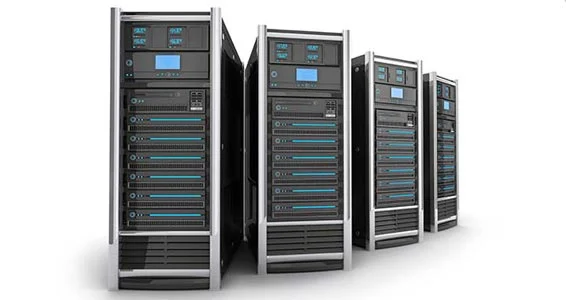
Definition: Was ist eine Kühlverteilungseinheit (CDU) eines Rechenzentrums?
Eine Kühlverteilungseinheit (CDU) ist das zentrale Verteilergerät in flüssigkeitsgekühlten Rechenzentren. Sie versorgt Kühlplatten, Tauchkühlbehälter oder direkt mit Wasser befüllbare Chips mit Kühlmittel – entweder Wasser oder fluorierte Flüssigkeiten. Die CDU gewährleistet eine gezielte Wärmeabfuhr auf Chip- oder Rack-Ebene und verbessert so die thermische Effizienz und Zuverlässigkeit moderner Rechenzentren.
Hauptfunktionen von CDU-Systemen
Kühlmittelverteilung: Die Durchflussmenge wird mithilfe von Pumpen und Ventilen gesteuert, um eine gleichmäßige Kühlung jedes Servers zu gewährleisten.
Temperatur- und Druckregelung: Hält die Kühlmitteltemperatur innerhalb eines engen Toleranzbereichs (±0,5°C) und gewährleistet einen stabilen Druck, um Kavitation oder Leckagen zu verhindern.
Redundanzdesign: Einsatz von Doppelpumpen- und Doppelstromversorgungskonfigurationen zur Gewährleistung einer Verfügbarkeit von 99,999 %.
Echtzeitüberwachung: Integriert sich in DCIM-Systeme, um Live-Feedback zu Durchflussraten, Temperaturen und Leckagestatus zu liefern.
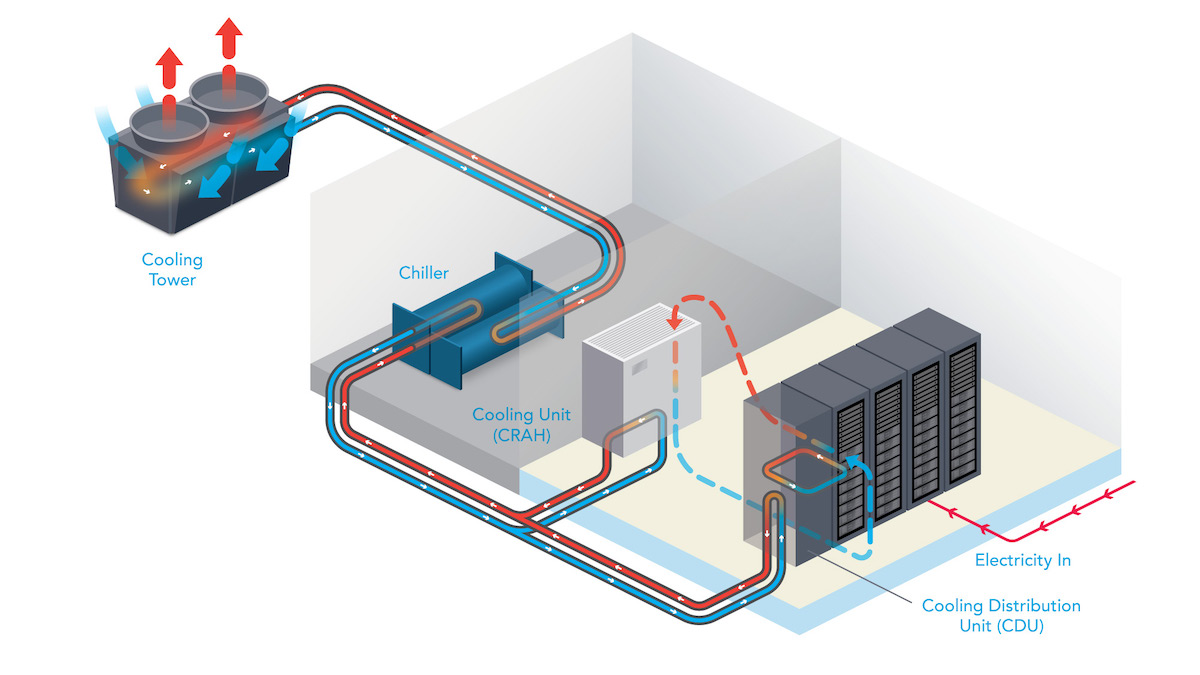
Arten von Kühlverteilungseinheiten für Rechenzentren
Rack-Level-CDU: Konzipiert für den Einsatz in einem einzelnen Schrank, unterstützt eine Kühlleistung von 30–100 kW. Ideal für skalierbare und flexible Implementierungen.
Row-Level CDU: Versorgt eine ganze Reihe von Serverracks mit einer Leistung von bis zu 500 kW, ideal für hochdichte Rechencluster.
Immersion-CDU: speziell entwickelt für einphasige oder zweiphasige Immersionskühlsysteme, kompatibel mit fluorierten Flüssigkeiten wie 3M Novec.
Vorteile von CDU-Flüssigkeitskühlsystemen
Erreicht einen PUE-Wert (Power Usage Effectiveness) von nur 1,05 und spart damit über 30 % Energie im Vergleich zur Luftkühlung.
unterstützt Workloads mit extrem hoher Dichte (z. B. 50 kW+ pro Rack für KI- oder GPU-Server).
arbeitet geräuschlos mit lüfterlosen CDU-Designs (<50db noise level).
application scenarios
supercomputing facilities (e.g., japan's fugaku)
ai training clusters (e.g., nvidia dgx a100)
edge data centers with compact cdu footprints
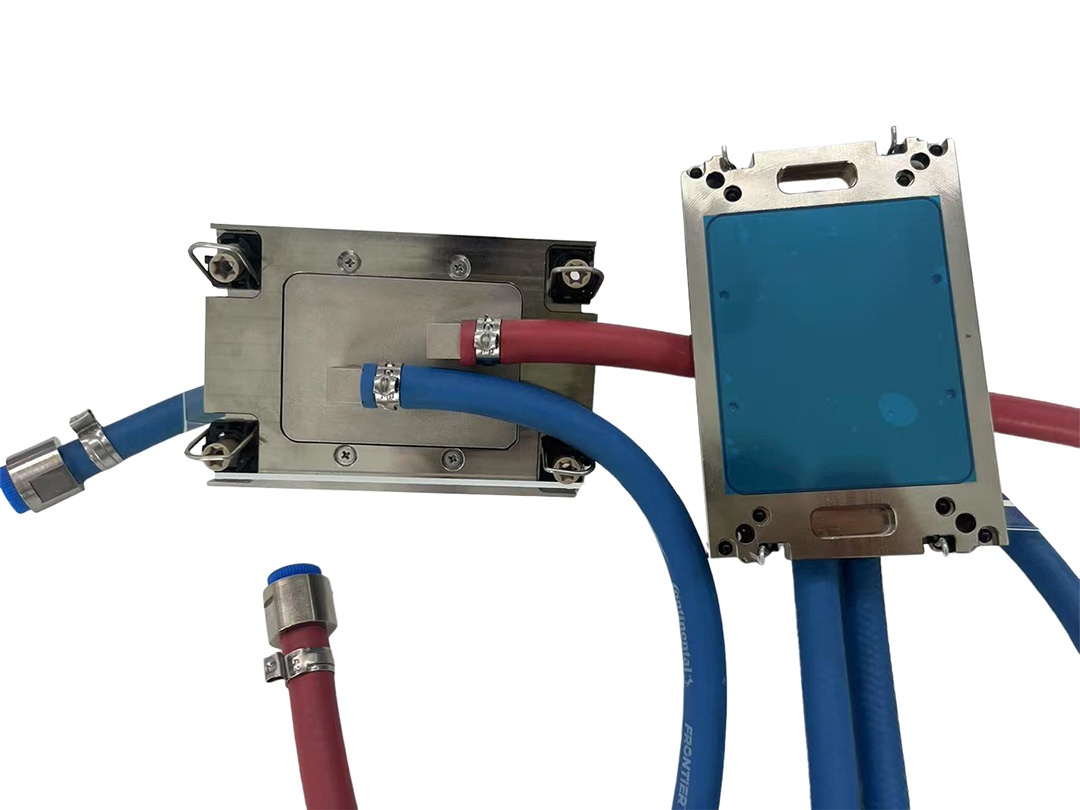
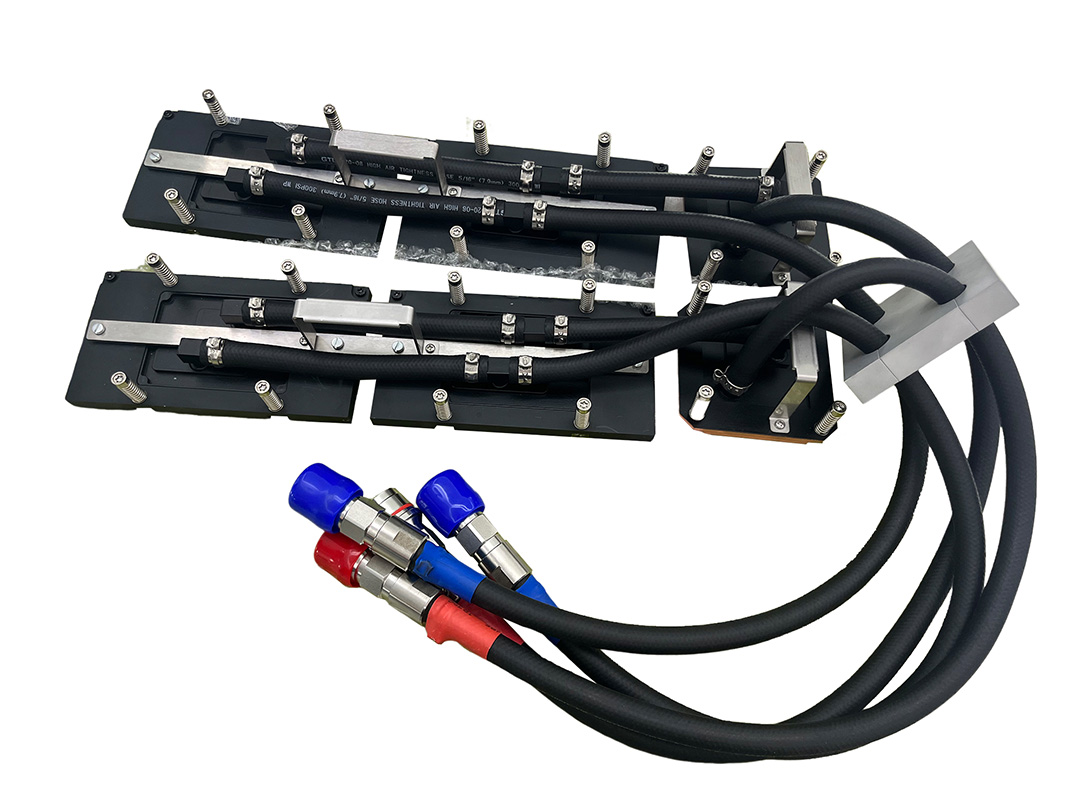
cold plates, heat sinks, and water blocks: the execution layer of cdu cooling
while the cdu serves as the command center for liquid flow, its true cooling potential is realized through its terminal components: cdu water-cooled cold plates, heat sinks, and water blocks. these components directly interface with heat-generating devices to execute efficient thermal transfer.
| component | cdu system role | application |
|---|
| cold plate | transfers coolant to chips via microchannels for precise heat removal | gpu/cpu-intensive racks, ai compute nodes |
| heat sink | provides secondary cooling to cdu's internal electronics | cdu control cabinet (pumps, psu modules) |
| water block | customized cooling of irregular thermal sources; connects with cdu pipes | hpc systems, supercomputing accelerators |
technical advantages vs. traditional air cooling
1. cold plates (cdu water plates)
extreme heat flux capacity: supports up to 500–1000w/cm², outperforming air cooling (50–100w/cm²).
surface uniformity: delivers thermal spread with <2°c delta across the plate, preventing local overheating.
smart cdu integration: built-in sensors feed real-time data to cdu controllers, enabling dynamic flow and temperature regulation.
2. heat sinks for cdu internal components
cdu self-cooling: ensures cdu reliability by passively cooling key electronics.
lightweight design: aluminum 6063 construction minimizes weight, ideal for rack-mount cdu units.
3. custom water blocks (cdu water block solutions)
complex shape compatibility: cnc or 3d-printed to match non-standard chip designs (e.g., nvidia h100).
low flow resistance: engineered water channels reduce cdu pump workload (pressure drop < 0.3 bar).
cdu-component synergy: smart thermal management
modern cdu liquid cooling systems are not standalone—they function in harmony with cold plates, heat sinks, and water blocks to form a dynamic, closed-loop thermal architecture. key highlights include:
dynamic flow tuning: cdu adjusts coolant delivery based on feedback from water plates or water blocks (e.g., via intel dcm protocol).
leak protection: quick-disconnect fittings (e.g., cpc, qd) on water blocks and cdu hoses ensure sealed, safe connections.
energy efficiency: combined cdu + cold plate architecture can achieve pue as low as 1.05, compared to 1.5+ for traditional systems.
real-world applications
google data center: utilizes cdus to distribute chilled water to rack-mounted water plates for tpu cooling.
tesla dojo supercomputer: employs cdu-integrated custom water blocks to manage 1mw per cabinet.
crypto mining farms: use aluminum cold plates + cdu instead of fans, reducing power consumption by 30%.
future trends in cdu-based cooling solutions
two-phase cdu cooling: uses phase-change fluids like liquid nitrogen to achieve 5x efficiency gains.
ai-driven cdu control: enables predictive adjustments in flow and temperature based on workload forecasting.
as the backbone of next-generation data center infrastructure, the data center cooling distribution unit (cdu)—along with advanced cdu water plates, heat sinks, and liquid cooling water blocks—will continue to evolve toward smarter, quieter, and more efficient thermal management solutions.
keyword summary: data center cooling distribution unit (cdu), cdu water plate, cdu water block, immersion cdu, rack-level cdu, cold plate, heat sink, liquid cooling system, full-chain liquid cooling, water-cooled server, ai liquid cooling.